
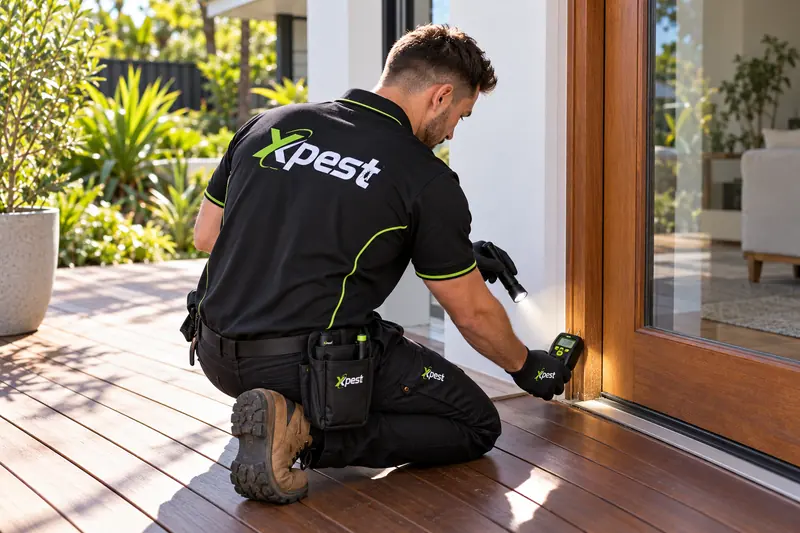
Quick answer: Yes. Termites are common across the Sunshine Coast and South East Queensland. Warm temperatures, high humidity, sandy soils and nearby bushland suit subterranean termites, which can reach homes through soil and timber without being seen. Most experts recommend a professional termite inspection at least every 12 months.
Why the Sunshine Coast suits termites
Subterranean termites need three things: moisture, warmth and timber. The Sunshine Coast supplies all three for most of the year. Summer storms keep soil moist, winters are mild, and many suburbs, from Caloundra and the new estates around Aura and Palmview to Buderim, Nambour and the hinterland, sit close to bushland, where termite colonies live in trees and stumps.
Termites forage underground and in mud tunnels, so they can travel from a tree in the backyard to the timber in a house without ever being exposed to light. That is why many homeowners only find out about termites when damage is already done.
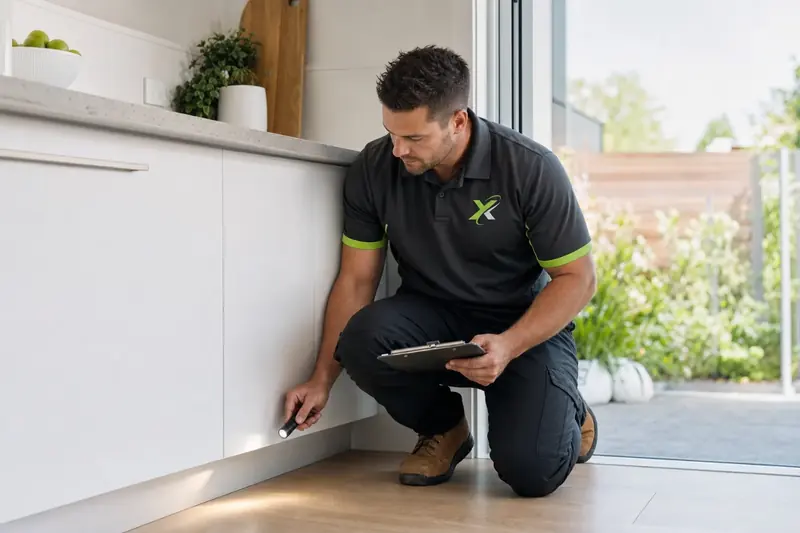
Signs of termites to look out for
- Mud leads: thin, pencil-width tunnels of soil on slab edges, piers, walls, fences or retaining walls.
- Hollow-sounding timber: skirting boards, door frames or architraves that sound papery when tapped.
- Sticking doors or windows, or bubbling paint on timber, which can be caused by moisture from termite activity.
- Swarms of winged termites (alates) on warm, humid evenings, often after rain in spring and summer.
- Damaged timber in the garden, such as sleepers, stumps, fence posts or stored firewood.
If you find termites, do not spray or disturb them. Disturbed termites often abandon that spot and keep feeding elsewhere in the house, which makes them harder to find and treat. Call for an inspection instead.
What raises the risk around your home
- Garden beds, mulch or soil built up against the walls, covering the slab edge.
- Timber touching the ground: sleepers, decks, fences, formwork left after building.
- Leaking taps, hot water system overflows, air-conditioner run-off and blocked gutters.
- Poor subfloor ventilation in older, highset Queenslanders.
- Extensions or renovations that bridged an existing termite barrier.
Why a visual check is not enough
Because termites hide, the most reliable way to know is a professional inspection. Xpest inspects in line with AS 3660.2 and, for pre-purchase checks, AS 4349.3. Your technician checks the interior, the roof void and subfloor where accessible, the exterior and the garden, and gives you a written report with photos covering any activity, damage and the conditions that make your home more attractive to termites.
How often should Sunshine Coast homes be inspected?
At least once every 12 months is the common recommendation, and more often if your home is near bushland, has had termites before, or has timber in contact with soil. If you are buying, book a pre-purchase timber pest inspection before your contract deadlines.
Common questions
What time of year are termites most active on the Sunshine Coast?
They feed all year, but activity and swarming peak in the warmer, humid months from spring through summer, often after storms.
Does home insurance cover termite damage?
Generally no. Most Australian home insurance policies exclude termite damage, which is why regular inspections are recommended.
Should I spray termites if I find them?
No. Disturbing or spraying termites can make them move elsewhere in the house. Leave them in place and book an inspection.
Related: Termite inspections · Xpest services Sydney, NSW and the Brisbane, QLDSunshine Coast, QLD.