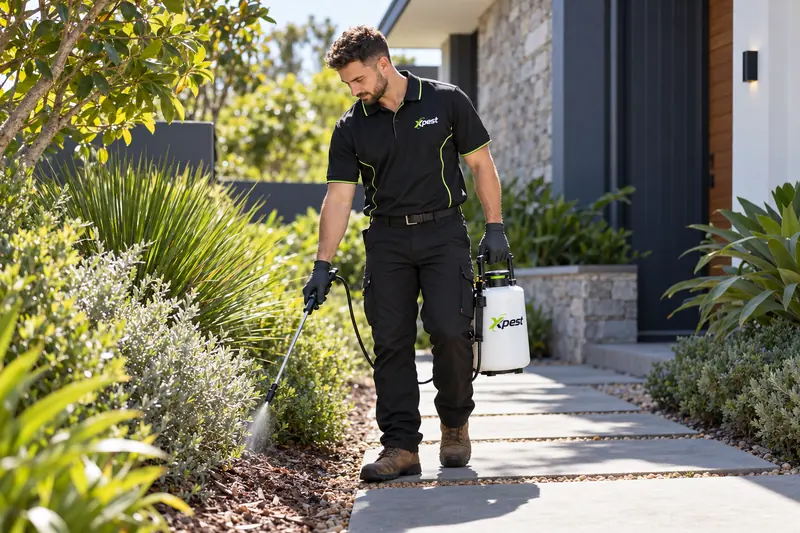
Effective ant control treats the colony, not just the ants you can see. Xpest follows the trails back to the nest, then uses a non-repellent spray or bait the workers carry back to the queen, plus a perimeter treatment to stop new trails coming inside.
Why ants keep coming back
The ants on your bench are a small part of the colony. Surface sprays kill the trail but leave the nest, and repellent sprays can make colonies split and spread. Lasting control means finding where they live, in wall cavities, under paving, in lawns or in garden beds, and treating them there.
Common ants we treat
- Black house ants and coastal brown ants trailing into kitchens and bathrooms.
- Ants nesting under pavers, driveways and lawns and lifting sand between joints.
- Carpenter ants nesting in damp or damaged timber, which often points to a moisture problem worth fixing.
- Ants in power boxes, air-conditioners and wall voids.
Fire ants are a notifiable pest in Queensland and New South Wales. If you suspect fire ants (small, coppery-brown ants with a painful sting and flat, dome-shaped mounds), report them to the relevant state authority rather than treating them yourself.
How our ant treatment works
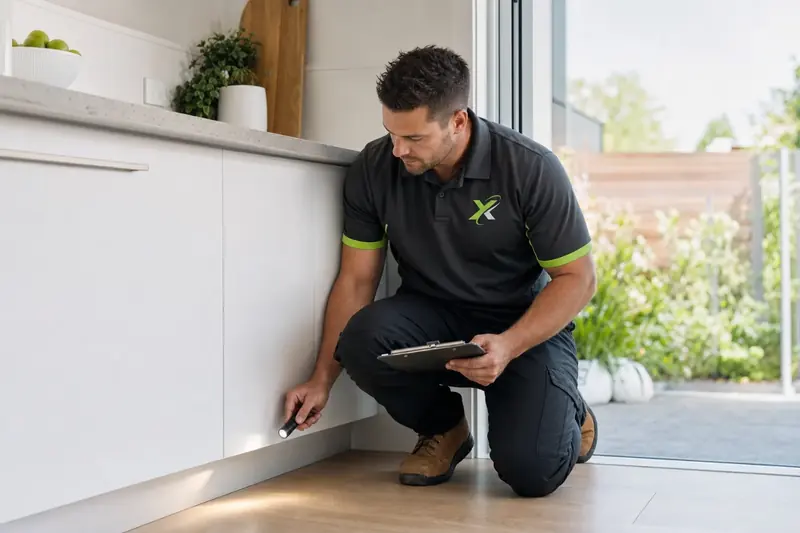
- Trace the trails back to entry points and nests, inside and out.
- Treat the colony with a non-repellent product or bait that workers carry back to the nest.
- Treat the perimeter and key entry points to stop new colonies moving in.
Expect to see ants for a few days while they carry the product back to the nest. Do not spray over the treated areas; let it work.
Is it safe for kids and pets?
Xpest uses products registered with the APVMA (the national regulator), applied to label directions by a licensed technician. Before we start, we tell you how to prepare, which areas to keep children and pets away from, how long to wait before re-entry, and what to do with pet bowls, fish tanks and bedding.
What does it cost?
General pest treatments start from $199 one-off or $15 a month on a subscription (see the pricing guide). Your exact price depends on the property size, the pest and how established the activity is, and it is confirmed before any work starts.
Ant Treatments by region
In Sydney, NSW
In Sydney, ant activity peaks from spring through summer, especially after rain, when colonies move indoors. We treat houses, terraces, units and townhouses across the metro area.
On the Sunshine Coast, QLD
On the Sunshine Coast, sandy soils and warm weather mean ants can be active most of the year, nesting under pavers and lawns and trailing inside after storms.
Common questions
How long does an ant treatment take to work?
You should see a clear drop within a few days to two weeks, as the product is carried back through the colony. Large or multiple colonies can take longer.
Is the treatment safe for my pets?
We use APVMA-registered products applied to label directions. Your technician will tell you which areas to keep pets away from, and for how long.
Will the ants come back?
A perimeter treatment reduces new activity, but ants are persistent, especially in warm, wet weather. Many homes add ants to a regular general pest treatment for ongoing protection.