
Quick answer: Rodent control on the Sunshine Coast works best in three steps: confirm whether you have rats or mice and find how they are getting in, reduce the population with tamper-resistant bait stations or traps placed out of reach of children and pets, then seal the gaps and remove the food, water and shelter that drew them in. Light activity often settles within one to three weeks, while heavier activity needs follow-up visits and monitoring.
Why rodents move into Sunshine Coast homes
Rats and mice are after three things: food, water and a dry, warm place to nest. Plenty of Sunshine Coast properties offer all three, especially homes backing onto bushland or creeks, hinterland acreage with sheds and chicken coops, and suburban blocks with fruit trees, compost bins and pet food left outside.
Activity often picks up when the weather cools, as rodents look for shelter in roof voids, wall cavities, garages and sheds. That makes late summer a good time to check the house and close the gaps before autumn.
Signs you have rats or mice
Rodents are mostly active at night, so you usually hear them or find the evidence before you see one. Look for:
- Scratching, scurrying or running noises in the roof or walls, especially after dark.
- Droppings in the pantry, kitchen cupboards, the roof void or behind the fridge and dishwasher.
- Gnawed food packaging, fruit, cables, insulation or timber.
- Greasy rub marks along walls, pipes and beams where rodents travel.
- A musty smell, or nesting material such as shredded paper, fabric or insulation in quiet corners.
- Pets staring at, sniffing or pawing at the same wall or cupboard.
It is worth acting early. Queensland Government guidance on pest control for food premises notes that rats and mice can nest in roof spaces and damage cables and pipes by gnawing, and they contaminate food and benches with droppings and urine. The same risks apply in a family kitchen.
Rats or mice? Why it matters
Mice are small, leave droppings about the size of a grain of rice and tend to stay close to food inside the house. Rats are bigger, leave larger droppings and travel further, often between the garden, the roof void and the kitchen. The species changes where bait stations or traps go and how much proofing the house needs, so a good inspection starts by confirming what you are dealing with.
Not every rodent is a pest. Queensland has native rodents, such as the water rat (rakali), which is listed under the Nature Conservation Act 1992. The Australian Museum notes that native rats are shy and rarely found around busy houses, and that a rat climbing through the roof or along fences is almost certainly an introduced black rat. If you are not sure what you have seen, have it identified before any bait or trap goes down, and leave native animals alone.
Where rodents get into a house
Mice can squeeze through surprisingly small gaps and rats are agile climbers, so entry points are not always at ground level. Around Sunshine Coast homes, the usual ones are:
- Gaps where pipes, cables and air-conditioner lines pass through external walls.
- Eaves and roof lines, often reached from overhanging branches, vines or climbing plants.
- Damaged vent covers and gaps around them.
- Gaps under garage roller doors and external doors.
- Open subfloors on highset and older homes.
- Sheds, garages and granny flats that connect to the main house.
Finding and sealing these gaps is what stops the problem coming back. Baiting without proofing usually means a new wave of rodents moves in a few weeks later.
What you can do today
Before any treatment, a few changes make your home far less inviting:
- Store food and pet food in sealed containers, and do not leave pet food out overnight.
- Keep bin lids closed and use an enclosed compost bin.
- Pick up fallen fruit and nuts, and keep chicken feed and coops tidy.
- Trim branches and vines back from the roofline and walls.
- Reduce clutter in the garage and shed, and store timber and boxes off the ground and away from walls.
- Fix leaking taps, hoses and air-conditioner drains.
These habits help with cockroaches too, as our guide to what attracts cockroaches in Queensland homes explains. If you use baits or traps yourself, read the label, use lockable stations, keep them well away from children, pets and wildlife, and only use products registered with the APVMA.
How professional rodent control works
Xpest's rodent control follows four steps:
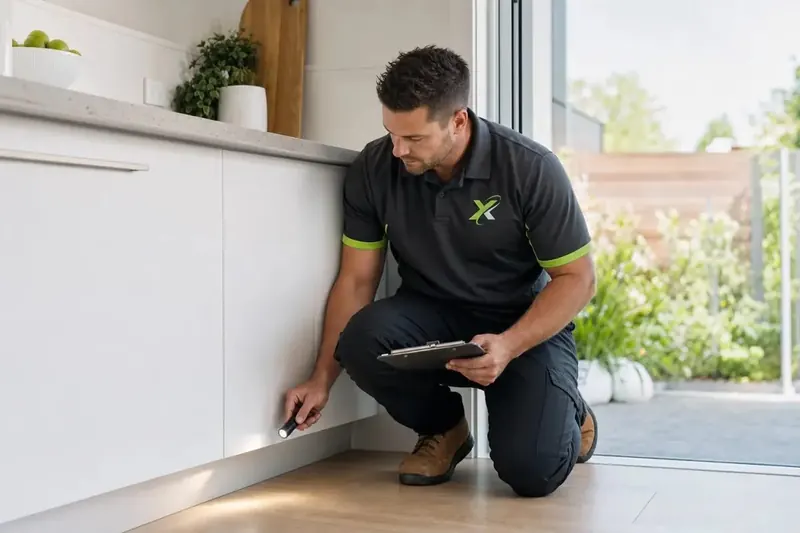
- Inspect: the roof void, subfloor, kitchen, garage and exterior are checked to confirm the species and find the entry points.
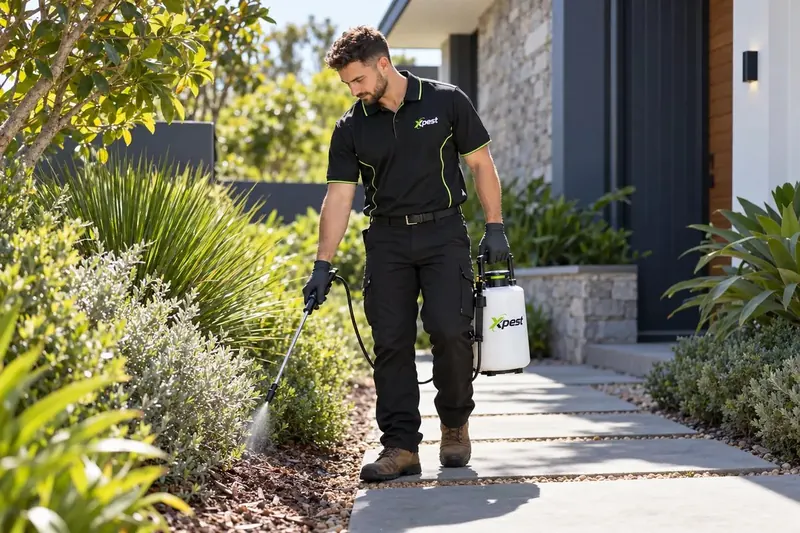
- Control: tamper-resistant, lockable bait stations or traps are placed where rodents travel and out of reach of children and pets.
- Proof and prevent: we show you the gaps to seal, such as pipe penetrations, roof lines and damaged vents, and the food and shelter sources to remove.
- Monitor and follow up where activity is heavy or the property is a food business.
Light activity often settles within one to three weeks. Heavier activity, or a property with easy entry points, may need follow-up visits and monitoring. For ongoing protection across the year, see our guide to how often you should book pest control on the Sunshine Coast. When you get a quote, ask what proofing is included and whether bigger repairs, such as damaged eaves, vents or door seals, need a handyman or builder.
Is rodent baiting safe for kids and pets?
Xpest uses products registered with the APVMA, the national regulator, applied to label directions by a licensed technician. Before we start, we explain where the stations go, which areas to keep children and pets away from and what to do with pet bowls and bedding. Tell us about dogs, cats, chickens or other animals when you book, so station placement and product choice can be planned around them.
What does rodent control cost?
It depends on the size of the property, how established the activity is and how many entry points need attention. Xpest's general pest treatments start from $199 one-off or $15 a month on a subscription, and you can add rodent control when you build an estimate on our pricing page. Rodent work is priced to your property after the inspection, and your price is confirmed before any work starts.
Cafes and food businesses
For cafes, restaurants and commercial kitchens, Xpest can set up a monitoring program with documented bait station locations and service records to support your food safety plan.
Common questions
How do I know if I have rats or mice in my roof?
The most common signs are scratching or running noises at night, droppings in the roof void or pantry, gnawed cables, packaging or insulation, and greasy rub marks along walls and beams. An inspection confirms the species and how they are getting in.
How long does it take to get rid of rats?
Light activity often settles within one to three weeks. Heavier activity, or a home with easy entry points, may need follow-up visits, monitoring and sealing of the gaps.
Are rodent bait stations safe around kids and pets?
Xpest uses tamper-resistant, lockable bait stations placed out of reach, with APVMA-registered products applied to label directions. Tell us about pets at booking so placement and product choice can be planned.
Why do rats keep coming back after baiting?
Usually because the entry points and the food, water or shelter that attracted them are still there. Proofing the house and tidying the yard is what stops a new wave moving in.
When are rats and mice most active on the Sunshine Coast?
Activity often increases when the weather cools, as rodents look for shelter in roof voids, sheds and garages, and around properties with fruit trees, chicken coops or bushland nearby.
Does Xpest do rodent control across the Sunshine Coast?
Yes. Xpest services homes and businesses from Caloundra to Noosa and the hinterland.
Hearing scratching in the roof or finding droppings in the pantry? Call Xpest on 0485 001 184 or request a free quote for rodent control anywhere from Caloundra to Noosa and the hinterland.